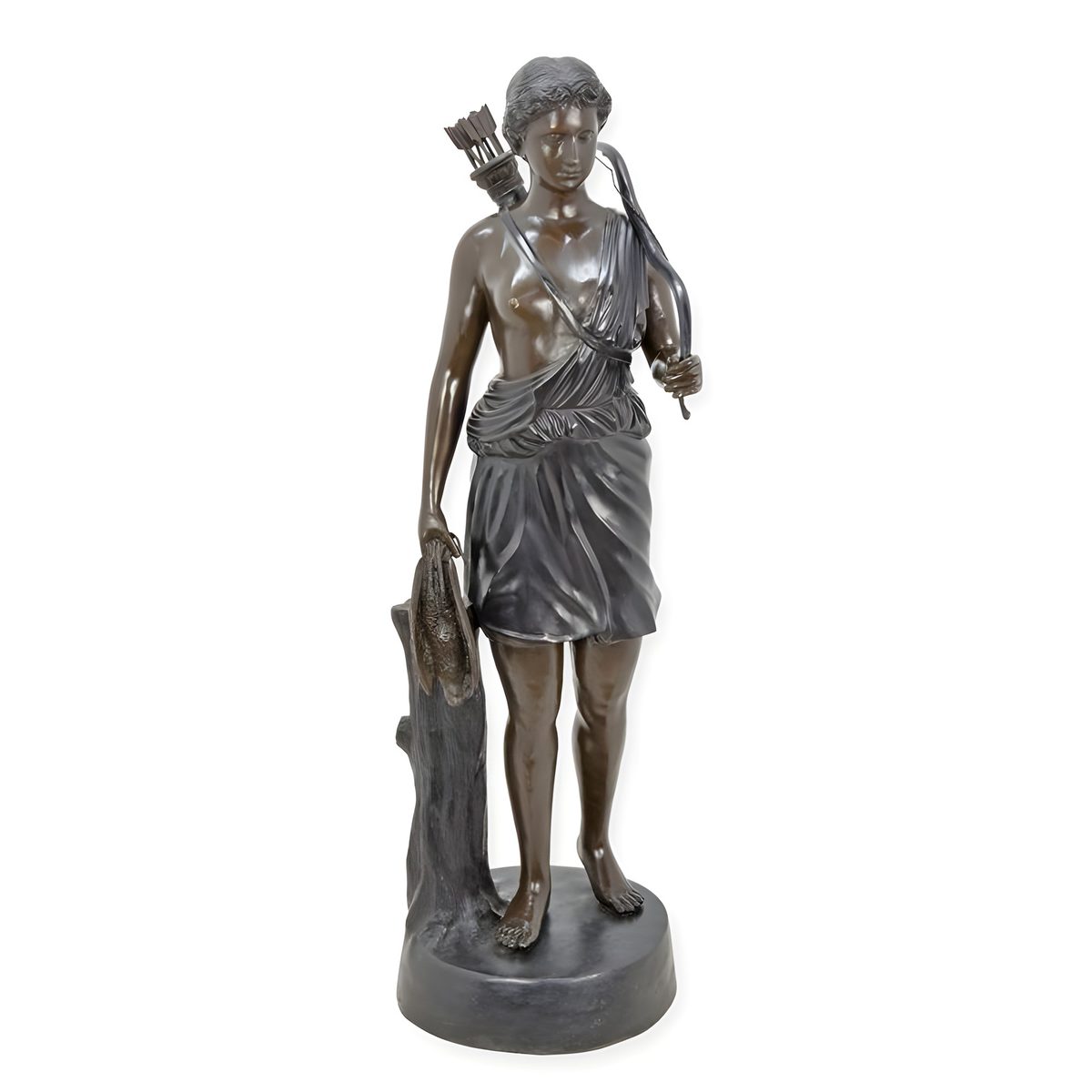
How a bronze is cast.
From a wax model to a finished patina: the five slow steps behind every bronze on the site.
· 2 min read
Lost-wax casting has barely changed in five thousand years. It is slow, and no two casts come out quite alike, which is the point. This is what happens between a sculptor’s model and the piece on your table.
Wax
Every bronze starts as wax. A rubber mould is taken from the sculptor’s original, and hot wax is brushed and poured into it to make a hollow copy a few millimetres thick.
The wax is then worked by hand. Seams are removed, details are sharpened, and wax rods are added that will later become the channels the metal runs through. Whatever is in the wax ends up in the bronze, fingerprints included, so this is where most of the care goes.
Shell
The wax is dipped in liquid ceramic and dusted with sand, again and again over several days, until it wears a shell about a centimetre thick.
The shell goes into a kiln upside down. The wax melts and runs out, which is where the name lost-wax comes from, and the heat fires the shell hard enough to hold molten metal.
The pour
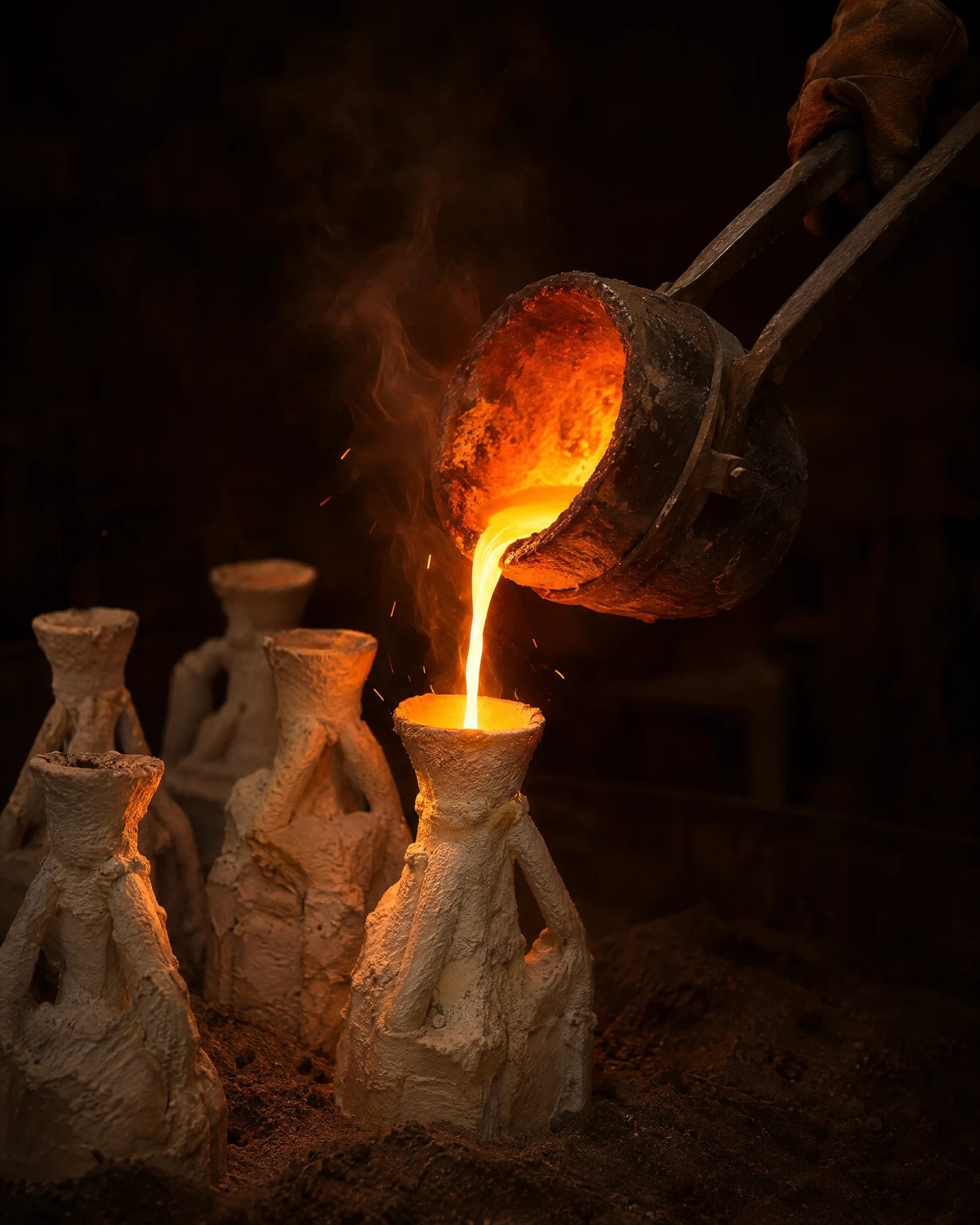
Bronze melts at around 950 °C and is poured hotter still. The shells are heated first so the metal does not chill on its way in, then the crucible is lifted and tipped by hand.
A small figure fills in seconds. Everything before this moment takes weeks; the pour itself is over before the glow has faded.
“No two casts come out quite alike, which is the point.”
Chasing
Once the metal has cooled, the shell is knocked away with hammers. What comes out is rough: the channels are still attached and the surface is a dull gold.
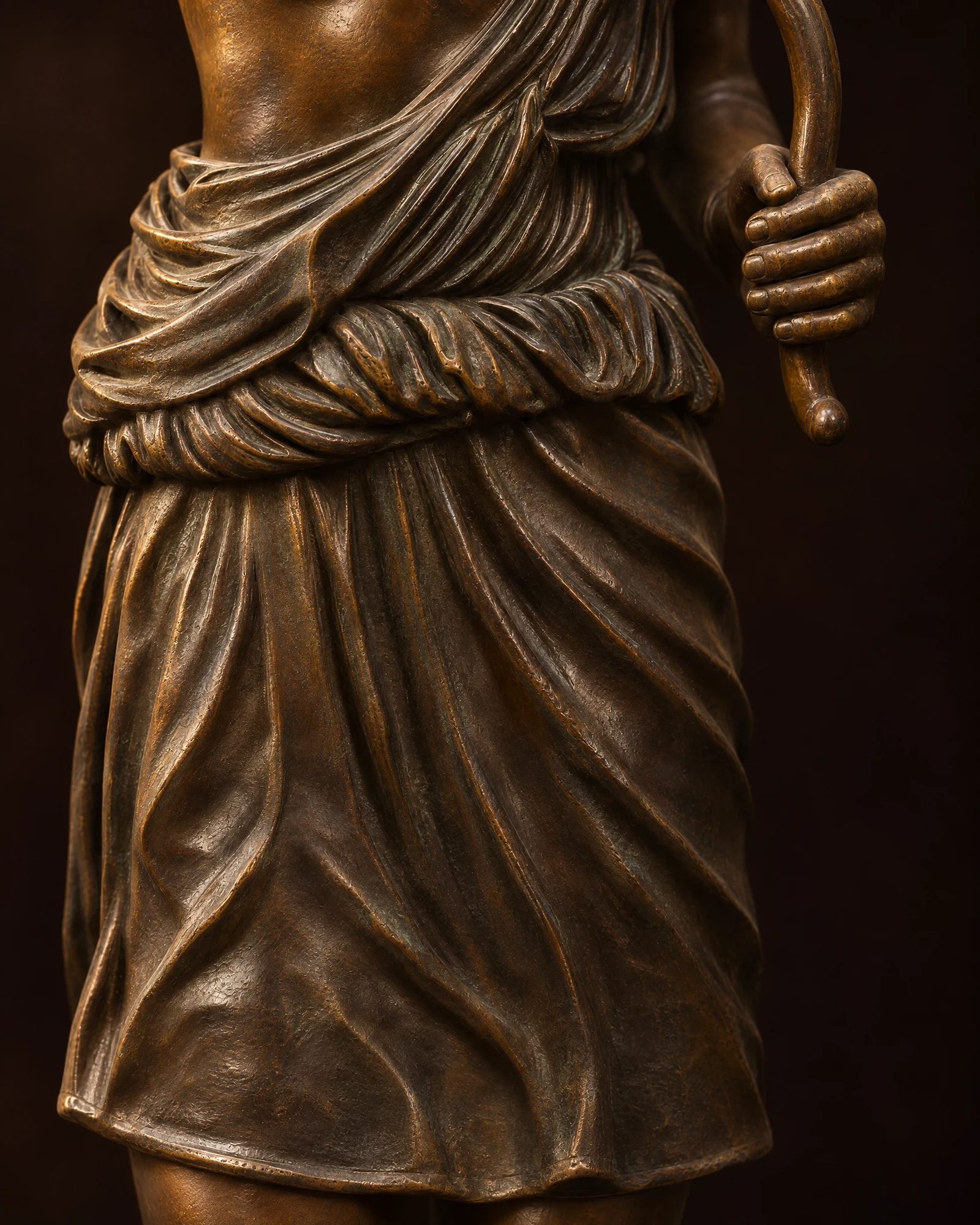
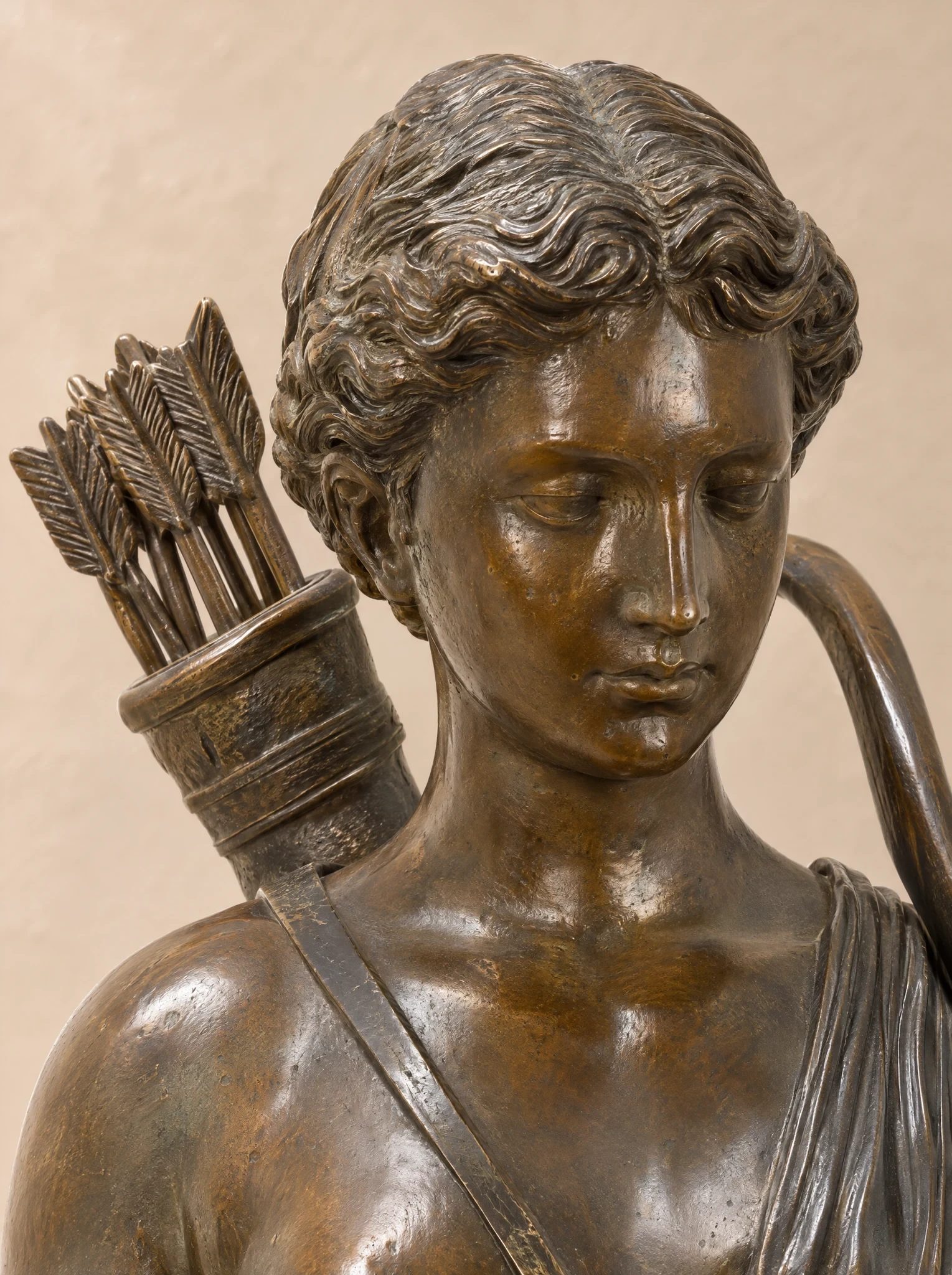
The channels are cut off and the marks they leave are chased, which means re-cut and textured with small punches until they vanish into the surface around them. On a figure like Diana the Huntress, the curls of hair and the feathers of each arrow are finished this way.
Patina
Bare bronze is the colour of a new coin. The browns, greens and blacks are patina: the metal is heated with a torch and brushed with chemicals that react with the copper in it.
Layers are built up, rubbed back on the high points so the form reads, and sealed with wax. The colour goes on changing slowly for years, most of all where hands touch it.